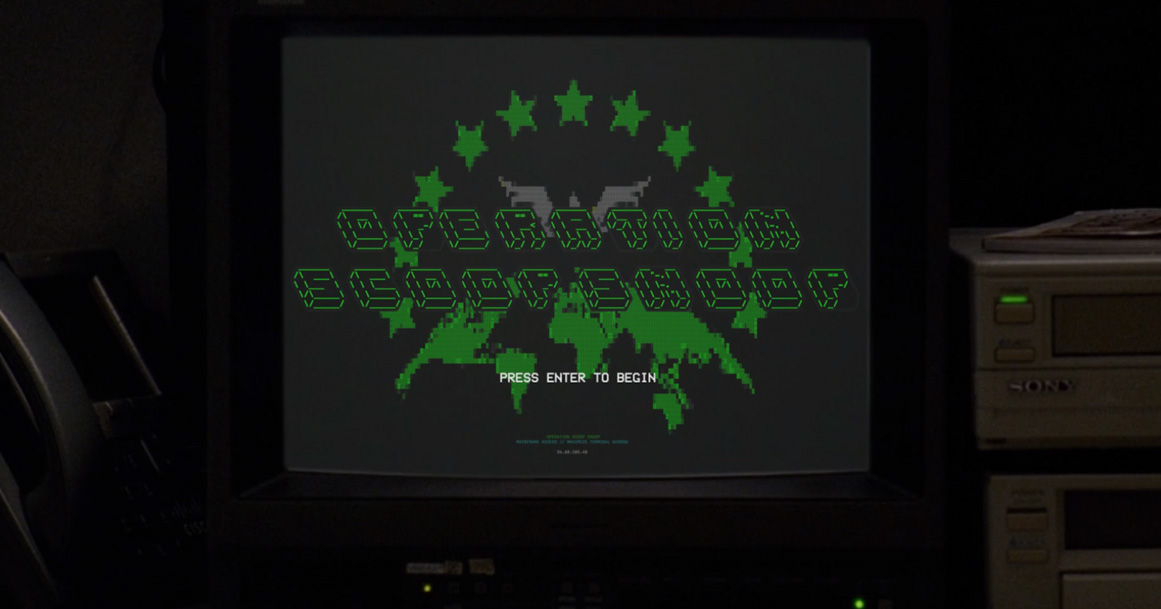
GUIDING TECHNIQUES IN <i>F.E.A.R. 2</i>

Introduction

I recently played through F.E.A.R. 2 and noticed that while the level design can be pretty complex at times, it's always instinctively clear where you're supposed to go next. This isn't an easy goal to achieve when designing a level, guiding the player subtly so it flows smoothly without being too obvious. I established a visual list of the different tricks used to guide players. Some of these techniques are specific to the game or the FPS genre, but others can be adapted to any type of level.

Rules of composition

Rules of composition, applied to architecture, are an important aspect of such intuitive designs. I'm going to mention some of these rules first, so the reasons why these tricks work so well will become clear. To do so, I'm going to base the following paragraphs off an article written by Professor J.L. Moia, teacher of Architecture at the University of Buenos Aires, and translated to French by Professor M. Bouziane, teacher at the University of Sciences and Technology of Oran (Algeria). Most of it is loosely translated from the original article, but I made some editions to match closer the theme of my own essay.

Unity

Unity is the quality obtained when all elements of a scene were designed and disposed in a logical and pleasing fashion, without any of them battling to look important. A space in which an organic unity has been achieved is simple, made of regular lines, free of confusion. Designing isn't simply placing objects next to one another. Every element of the composition will be necessary and adding or removing anything would break the unity. It's not enough that the random elements are disposed harmoniously, they have to suit the general idea behind the design. Within a large structure, every room should respect and second the global unity of the whole. Breaking a scene's unity can be enough to make one of the elements stand out.
That tree in the middle of the street definitely looks out of place and odd.

Center of Interest

For a composition to feature the required unity, it is necessary for it to have a visual center, which means a point that attracts the look and dominates clearly the entire scene. The center of interest must catch the eye first, then progressively lead to the other elements, in order of importance.

There are multiple ways to attract or detract attention from an object. Sven Hesselgren mentions these:

  • A large object is more easily distinguished than a smaller one, and attracts the eye through its sheer volume. If an object is under a certain size, it won't be observed, unless its signification holds an extraordinary interest (like a religious building, even small, will look more important than a bigger, generic structure.)
  • Strong shapes are looked at more than others. "Strong" in this case refers to attributes like regularity, symetry, closure, unity, blandness, simplicity, etc.
  • Shapes featuring different caracteristics than their neighbors will attract attention.
  • Closed shapes possess a faculty to catch the eye. This is generally put forward in advertising, by placing frames around commercials for instance.
  • Shapes that, through their representation of movement or lines, "indicate" a center, will guide the viewer's look to that focus point.

Concerning color, we can note these phenomenons:

  • A bright object is considered more striking than a dark one. In general, we consider a saturated color (i.e. of great intensity) as more visible than the alternative. It would seem that the red color is the most visually attractive, while the black color has the opposite effect.
  • The difference, or gap between light and shadow, is more important than the gaps in tones or saturation. For that reason, white is generally combined with black in road signs, but yellow juxtaposed with black is more effective, because to the gap between brightness and darkness gets added the difference in tone.

The following paragraphs describe more concepts that help defining the center of interest of a scene.

Contrast

Unity must be conceived as a synthesis of opposing elements, rather than a monotonous entity. It is necessary to express the vitality of a design by developing the contrasts, but clearly putting one of the elements forward. However, the excess of contrast generates monotony, and repetition tends to diminish the effects of a hard contrast.

There are multiple ways to obtain variety through contrast, such as the opposition between vertical and horizontal elements, between defined and indefined forms, between volumes, colors, textures, lights, etc.

Rythm

Like in music, rythm is a repetition which alternates different elements. In visual designs, a clean surface will give a feeling of rest and lack of movement, but introduce a linear element, and it will result in a dynamic sensation, which has to be rythmed or it will appear confusing and disturbing otherwise.

Additionally to the regular disposition of elements like pillars or texture tiling or colors, the most interesting possibilities are subtle: occulting the rythm so it isn't consciously percieved, and breaking it to attract attention toward the point of rupture.

In this particular level, all the doors are closed by default, so this one looks intriguing.

Proportion

Every design implies a consideration of proportions, based on the relation of the dimensions of each parts with the others as well as with the whole scene. A shape has correct proportions when the size of its parts generates an harmonious relationship with the environment.

With that in mind, very different dimensions placed side to side lack coherence. A piece of furniture can be pleasing in its shape, color and texture, but if it doesn't fit the rest of the furniture and the dimensions of the room, it will look out of place. A vast space will accept bigger furniture, larger patterns, more intense colors and sharper contrasts.

As surprising as it may sound, proportions are more important than color when designing indoor areas. The skill of the eye to percieve shapes and proportions is more developed and vary less from a person to another than the ability to distinguish colors. Colors also have different meanings depending on the individual, but shapes provoke similar reactions on everybody. Thus, an object of wrong porportions in an otherwise harmonious environment will be instantly visible.

The huge proportions of the platform make it look odd within a game where everything so far was rightly sized.

Scale

The appeal of any design is determined by a critical element: the human scale. That means, the relation between dimensions of the elements and those of the viewer. Inconsciously, we compare everything to our own size. A structure with an odd scale will trigger a reaction, either ridicule, repulsive, or to the contrary, impressive and attractive.

Volume always has a relative value. A sense of scale derives directly from the memories associated to similar elements. A new building will look big or small depending on the size of what we are used to see, and a bedroom full of familiar objects will look bigger than an empty one.

An architect can organize at will the effects of his creation by scaling up or down its volume or that of its parts, to modify the relation between the scene and the viewer.

This massive building is your ultimate objective and in the last level, you continuously strive toward it.

The scale of the crater makes you look down on it, and that's how you notice the pipe right under your position, allowing you to get down.

Tricks to guide the player

With the theory in mind, it is now easier to grasp the genius behind some of these techniques used to guide the player in F.E.A.R. 2 levels. In many situations, a lot of different tricks are tightly joined together, but I'll do my best to isolate them. With that in mind, the pictures used can obviously fit in different paragraphs, but they should still illustrate the point at hand. In the last section of this article, I'll consider a full level and see how these tricks all blend together nicely, but you can also notice that in the pictures below.

Lighting

This is possibly the most important trick in the book. Clever lighting alone can drive a player through a whole level. Contrast in brightness and color will naturally inform the player about an element. The lighting in the game F.E.A.R. 2 is particularly smart, so most of the time the other tricks simply reinforce the visibility of a given object or path.

This is part of a large and complex area, containing multiple locked doors. But as soon as you stumble upon this shaft and the beam/light coming out of it, you know it's through here you have to proceed.

In this example, both double doors are wide open, but the light on the left ones is brighter and warmer. Not surprisingly, the right entrance is blocked while the left one is the good way to go.

In a dark and vast environment, the white lamps on the ground and their glowing effect help notice this important control screen.

In this schoolyard, only one lamp is on. Right under it, the player finds a padlocked fence that he can break open.

Can it get more obvious where you can go and where you shouldn't bother trying?

Items

The cheapest but also very effective way to guide the player, is simply placing items near the bottlenecks that he could otherwise miss, such as doors in dark areas, holes in the ground, or windows. Of course it helps if the items shine or contrast with their surroundings.

Health seringes placed at the bottom of the hole in the ground imply you're supposed to jump down.

This medpack makes sure players at least glance at this corner, or best, approach to pick it up, thus going on through the open door. In this case, the glowing soda machine helps aswell.

Decals, Lines & Trails

Decals can act as breadcrumbs if placed intelligently, and especially if they seem to indicate a trajectory or a movement, like a blood trail or an arrow painted on a wall. Be it a decal, a wall's texture or a trail of objects, lines inconsciously guide a viewer in the direction they are pointing at.

Sounds

Sounds are a good mean to attract the player toward a remote or hidden area. They're also good to add variety in a level, not relying on the same sense all the time. It's powerful thanks to nowadays sound cards that allow you to detect the source of a sound in 3D, even through headphones.

In this case, the player finds himself on a platform with no clue where to go next, but the constant sound of water falling down attracts his attention to this hole in the ground, which was out of his sight behind a wall.

Particle Effects

Particle effects are closely related to other tricks because they feature movement as well as colors and sounds that render them very easy to spot. They are best used to reinforce lighting or a game mechanic.

The fire particles make it impossible to miss that hole in the wall.

The electrical effect on the cables and the water show the danger, but also attract attention to the door, and lead to the solution of the puzzle: a power box attached to the pole on the left.

Open Doors

By default, an open path is more attractive than a closed one, so open doors will naturally drive the player forward. Relying on this trick means that optional doors should preferably be closed then, to avoid misleading players.

Notice how a half-open door looks more interesting than a fully open one. It's because an open door can mean the player already crossed this area, or that a enemy entered through here. An half-open door is intriguing and means you haven't been through it yet.

Enemies

In F.E.A.R. 2 like many other games, most of the navigation is done by simply following the trail of enemies.

Enemies coming out a door will instinctively lead the player that way.

However, the designers have to make sure that other entrances that the player can't visit don't look like the standard openable doors, to keep it coherent. In the last shot, additional enemies come from the hole in the wall, but its position makes it clear you're not supposed to exit through there.

Allies

If you have friendly NPCs in a level, it can be a good idea to use them when it's hard for the player to find his way. In the mod 7th Serpent: Genesis, the layout of the building was very complex and little other tricks could be used to good effect, so I decided to insert a partner that leads the player on the right path, and it worked quite well indeed.

At this point, it isn't obvious where to go because the main corridor is blocked and there are multiple rooms around, so your ally opens the way by standing in the doorway, waiting for you to follow.

The presence of an ally (talking to you) gets you closer to the fence, so you notice the door on the right.

Hallucinations & other Scripted Events

This is specific to F.E.A.R. 2, they turned the hallucinations the player is victim of into clues. For once, the main and most impressive visions are only placed on the critical path so the player understands he's on the right track simply thanks to the frequency of his visions. Additionally, they can attract the player toward an object by, for instance, spawning a shining specter next to it, or showing an alternate universe through a window to make you understand you need to go through it.

In general, scripted events (short sequences taking place in front of the player) have the particularity of attracting attention, but it's hard to define, let alone classify them, as they usually combine movement, sound, characters, particles, etc. In the case of F.E.A.R. 2 though, the large majority are hallucinations or paranormal events, so that's the title I'll use to describe them. But "regular" events have the same effect.

The vision of one of your partners, under the charm of the telepathic Alma, leads you through this whole level, always disappearing as you get close.

Game mechanic

Game mechanics such as repeated puzzles or special objects are recognized by the player and so easily help guide him. But before using them, you need to have a proper introduction that the player can't miss. In the case of F.E.A.R. 2, it helps that these puzzle elements are never used for secondary paths or secrets, so after a while you understand that all of these elements are critical to progressing, and give them more importance.

After encountering one of these valves, the player knows they are critical to advancing.

Early on, the player gets briefed about lifting half-fallen, 45-degrees furniture.

Movement

In a still environment, movement will immediatly get noticed, and can be used to show players the way.

Rats running toward the exit of the tunnel.

This rotating device gets you closer so that you may spot the way down the platform, on the left.

This particle effect heading right shows the way.

HUD Updates

In games featuring objectives and autosaves, these HUD overlays take a signification and indicate that you are on the right track. An autosave means that you are somewhat secure for a moment, because saving the game in the middle of a firefight is a bad idea; also, it means you aren't on an optional path, that you are advancing.

A new objective means that you're making progress or achieved something. Additionally, the objectives themselves can lead you through a level. For instance, mentionning you have to reach the roof of the building will make you look for any path going up. Radio messages will also be considered as HUD Updates in this case, since they display the face of the character speaking, and they have the same effect as the objectives display.


Signs

Like in everyday's life, signs are important in buildings with complex layouts, so it makes sense to use them aswell in games. However, they should usually be combined with other tricks from the list, so a player not too attentive doesn't mistake them for decoration.

Danger

Instead of attraction, you can also use repulsion (physical danger or fear) to push the player in the wanted direction. This is harder to accomplish and trickier to get right, because if the player doesn't understand what he's supposed to do, he will be punished. But that can add variety as well as challenge.

The elevator at the end of the corridor isn't clearly visible. But as the player enters the area, gas pipes start blowing up behind him, pushing him toward the elevator, forcing him to activate it in a hurry.

Visual language

Another important aspect of guiding the player through a level is to make it clear when a path is blocked or isn't. The designers of F.E.A.R. 2 used numerous visual clues to save the player from banging on closed doors (and thus frustration).

Furniture stacked against doors make it clear they cannot be opened. There's always a piece of junk high enough so it's visible through the glass, making it easy to know without having to get close.

At one point, you see and hear enemies sealing a door shut. So when you encounter these decals on a door, you know it's not worth trying to open it.

Case study

This video is a playthrough of a random F.E.A.R. 2 level, with pauses at given moments to show the techniques in action. There are way too many to list accurately, and most of them get repeated a lot, so I kept just enough to show the main tricks as well as the least obvious ones. Please note that I won't explain how they affect the player because it has been covered above already. I also had to fast-forward through the battles or Youtube wouldn't take it.

Conclusion

It is surprising how many different tricks the level designers used to direct the player, and how well and flawlessly it all blends together. The techniques described in this essay do not restrain the player's freedom, they just help him find his way naturally, without needing a map.

However, it's important to note that there's not always some trick to guide the player at any given moment, because it counts on the player's common sense, curiosity, and trial and error. What's important is that navigation is done smoothly, that there are rewards to exploring the optional areas of a level (health, weapons or PDA data) and that the game doesn't punish you for choosing the wrong door.

There is a lot to learn from the level design of this game. F.E.A.R. 2 may be a classic linear shooter, but what does, it does it well, intelligently, and subtly, and for that it deserves praise.

Further reading

No more wrong turns

by Martin Nerurkar on Gamasutra.
Given how thorough it is, I suspect I wouldn't have bothered completing my own essay if I had known about Mr. Nerurkar's earlier.